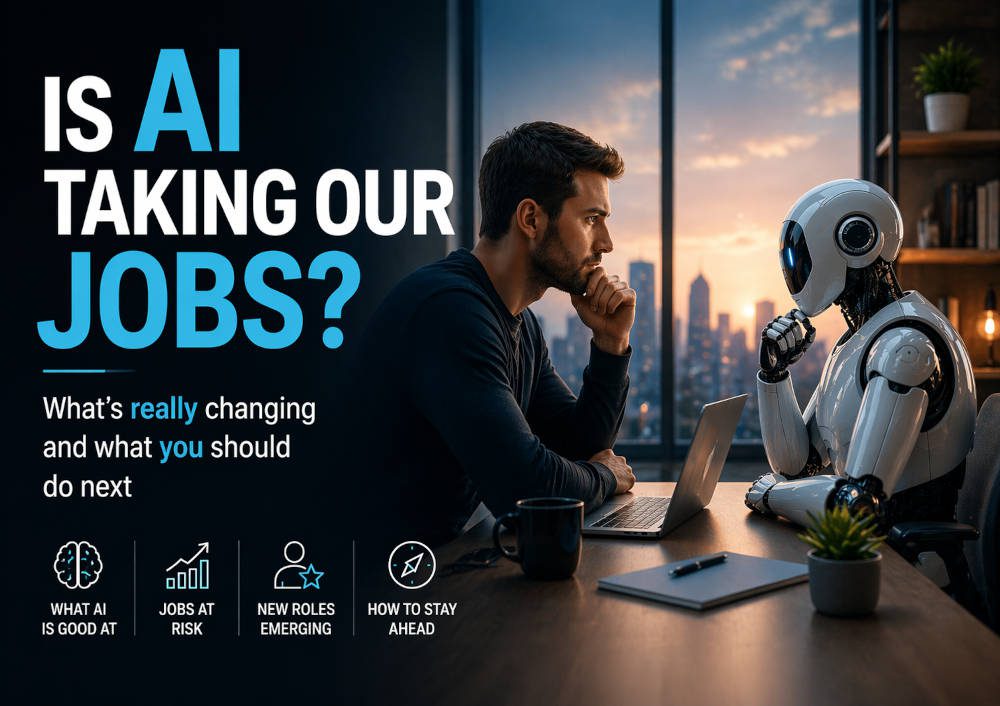
Every time a new AI tool goes viral, the same question comes up: “Is this going to replace me, is AI taking our jobs?”
It’s a fair question. Things are moving fast, and the headlines don’t exactly calm anyone down. But if you look at how AI is actually being used day to day, the situation is a bit different from what it sounds like.
>> READ ALSO: THE BEST AI TOOLS IN 2026
What AI is really good at
AI is great at speed. It can generate text, summarize long documents, suggest ideas, and automate repetitive tasks in seconds. Work that used to take hours can now be done in minutes.
But there’s a catch. AI doesn’t understand context the way humans do. It doesn’t know your goals, your audience, or what matters in your specific situation.
It produces output. It doesn’t make decisions. That difference matters more than people think.
The real shift isn’t replacement
The biggest change right now isn’t that AI is taking over jobs. It’s that the way we work is changing.
Before, a lot of value came from doing things manually. Writing everything yourself, building step by step, searching for answers piece by piece. Now, a big part of the value comes from knowing how to guide the tools.
The people who get good at this can move faster, test more ideas, and get better results with less effort. The ones who ignore it will feel slower over time.
Will some jobs disappear?
Yes. Roles that are heavily based on repetitive tasks are already shrinking. That includes things like basic data entry, simple content generation, and routine support tasks. But that’s only one side of the story.
At the same time, new types of work are emerging. People who can use AI tools effectively are becoming more valuable because they can do more in less time.
Instead of replacing people completely, AI is changing what “useful work” looks like.
The part people don’t like to hear
AI isn’t the thing replacing you. A person who uses AI better than you might be. That’s where the real pressure comes from.
What actually helps right now
You don’t need to overthink it. Start small.
Use AI for everyday tasks:
- drafting emails
- summarizing information
- brainstorming ideas
- simplifying complex topics
- speeding up repetitive steps
Pay attention to where it helps and where it doesn’t. That’s how you build a practical understanding, not just theory.
So… is AI taking our jobs?
Not exactly. It’s changing how work gets done.
And right now, that change is creating a gap between people who adapt and people who don’t.
That gap is where most of the opportunity is.